
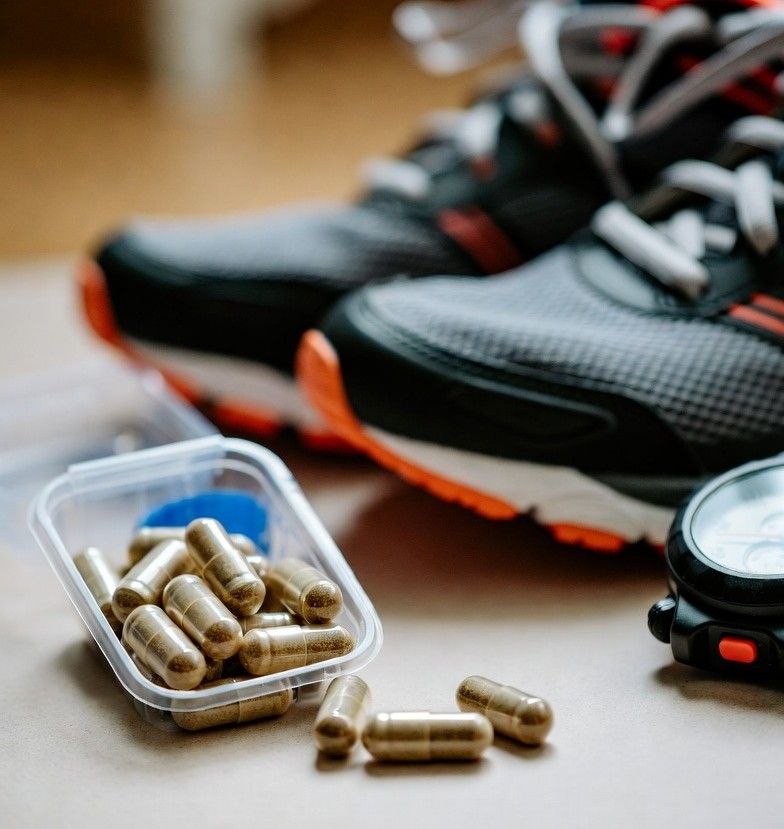
The global sports nutrition market is projected to surpass 30 billion dollars in the coming years, according to Grand View Research. That number says one thing loud and clear, athletes are always searching for an edge. Legal, safe, and ideally powerful. From protein powders to beetroot juice shots, the line between smart supplementation and wishful thinking gets blurry fast.
Recently, more competitors have started eyeing herbal testosterone support products such as Tongkat Ali Supplement. Extracted from a Southeast Asian root long used in traditional medicine, Tongkat Ali, also known as Eurycoma longifolia, is often marketed as a natural way to support testosterone levels. For athletes chasing strength gains, that promise sounds tempting. But does it actually translate to better performance on the field, track, or platform?
What the Science Actually Says
Some small clinical studies suggest Tongkat Ali may help increase free testosterone levels, particularly in men with low baseline levels. Research published in journals such as the Journal of the International Society of Sports Nutrition has explored its potential to support strength and body composition. In a few pilot trials, participants experienced modest improvements in muscle strength after several weeks of supplementation.
Here is the catch. Many of these studies involve small sample sizes, short timelines, and recreationally active men rather than elite competitors. A weekend gym enthusiast and an Olympic sprinter are very different biological machines. What works for one may barely move the needle for the other.
When it comes to endurance performance, results are mixed. Some studies show minimal impact on aerobic capacity or time-to-exhaustion. Others show no significant difference at all. That inconsistency matters. Elite sport is built on marginal gains. If a supplement cannot deliver measurable results under controlled conditions, coaches tend to move on quickly.
The Gap Between Pilot Studies and Podiums
Sports science has a long memory. Creatine earned its reputation through repeated, well-designed trials across different athletic populations. Caffeine did the same. Tongkat Ali has not yet reached that level of evidence.
Dr. Louise Burke, a respected sports dietitian who has worked with Olympic teams in Australia, often emphasizes that supplements should sit on top of solid training, nutrition, and recovery. They are the icing, not the cake. That perspective matters here. Even if Tongkat Ali offers mild hormonal support, the effect size may be too small to dramatically change elite outcomes. For athletes who want long-term results, following a practical guide to becoming a strong and well-rounded athlete is often far more impactful than relying on a single supplement.
And there is something else athletes rarely admit publicly, the placebo effect is powerful. If a competitor believes a supplement sharpens their aggression in the weight room, performance can improve simply from confidence. Sport is mental. Sometimes belief fuels output as much as biochemistry.
Is It Allowed in Elite Competition?
Regulation is where things get serious. The World Anti-Doping Agency, commonly known as WADA, maintains a prohibited list updated every year. As of current guidelines, Tongkat Ali itself is not listed as a banned substance. That means it is permitted under WADA rules.
However, the story does not end there. The International Olympic Committee aligns with WADA standards, and national bodies such as the United States Anti-Doping Agency follow similar frameworks. While the herb is allowed, contamination is a real risk. Some testosterone-boosting products have been found to contain undeclared anabolic agents. That is where athletes get into trouble.
Strict liability applies in anti-doping. If a banned substance appears in your sample, intent does not matter. You are responsible. Careers have ended over contaminated supplements. That reality makes elite athletes cautious, sometimes almost paranoid, about what they swallow.
Safety First, Always
Most research suggests Tongkat Ali is generally well tolerated in healthy adults when taken at recommended doses. Reported side effects are mild, including sleep disturbances or irritability in some users. Still, long-term data in high-performance populations remains limited.
Elite teams often rely on third-party testing programs such as NSF Certified for Sport or Informed Sport. These programs screen supplements for banned substances. Athletes considering Tongkat Ali tablets usually consult a sports physician or performance nutritionist before adding it to their routine. That step is boring, yes. It is also smart.
There is also the hormonal angle. If an athlete already has optimal testosterone levels, pushing them higher may not produce dramatic gains. The body regulates tightly. More is rarely better. Sometimes it just means more stress on the system.
So, Performance Edge or Placebo?
The honest answer is somewhere in the middle. Early evidence hints that Tongkat Ali tablets may support strength in certain populations, particularly men with lower testosterone. Endurance benefits are far less convincing. For elite athletes operating near their genetic ceiling, the effect may be subtle.
That does not mean it is useless. It means expectations should be realistic. Supplements can support performance, but they rarely replace disciplined training, structured recovery, and precise nutrition planning.
In the end, Tongkat Ali tablets sit in that gray zone of sports supplementation. Legal under major governing bodies, potentially helpful in specific cases, yet still lacking the heavyweight evidence that defines proven ergogenic aids. For competitive athletes, the smartest move is simple. Test carefully, verify quality, consult professionals, and remember that confidence built in training usually beats confidence bought in a bottle.
Key Takeaways
Current research suggests that Tongkat Ali may offer modest strength benefits, particularly for men with lower baseline testosterone levels, though the evidence is still limited. Large, well-controlled studies involving elite athletes are lacking, which makes it difficult to draw firm conclusions about its impact at the highest levels of competition. Tongkat Ali is not banned by major anti-doping authorities such as the World Anti-Doping Agency, but contamination risks in the supplement industry mean athletes must be extremely cautious. Third-party testing and professional guidance from sports physicians or performance nutritionists are essential steps to reduce risk and protect eligibility. Ultimately, supplementation should support, not replace, disciplined training, recovery, and sound nutrition practices.