
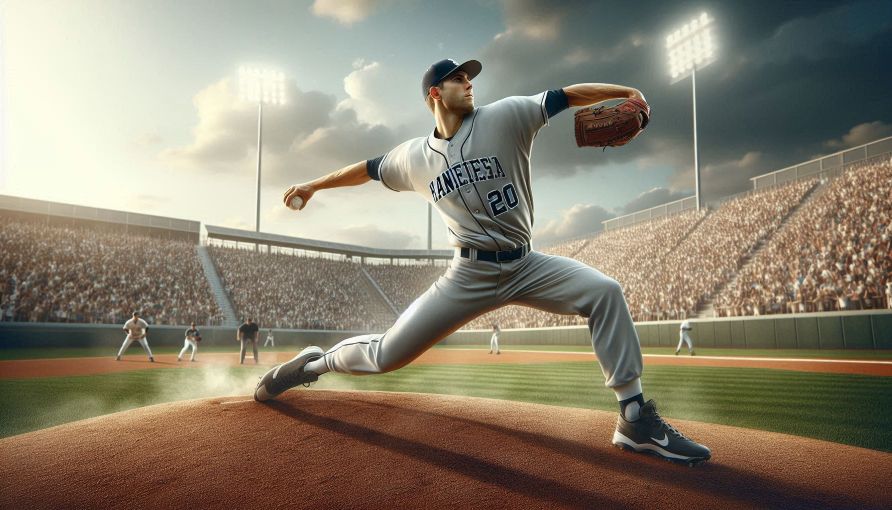
According to the National Institutes of Health (NIH), athletic performance depends on a combination of strength, coordination, and mental focus working together in real time. That balance is especially clear in baseball pitching, where every movement has to be precise and intentional. It’s one of those sports skills that looks effortless until you try it yourself, then suddenly, you realize how much is actually going on behind each throw. This article explores how collegiate pitchers build their abilities and how those same training principles can translate into everyday fitness.
The Art of Controlled Power
Baseball pitchers can generate arm speeds exceeding 7,000 degrees per second, a level of motion that pushes the human body to its limits. That kind of explosive performance doesn’t just happen, it’s built through years of training, discipline, and a little bit of obsession. Watching a collegiate pitcher command the mound feels like witnessing controlled chaos. Every pitch is a mix of timing, balance, and raw force. It’s the kind of athletic precision that makes you pause and think, how do they even do that?
One athlete who embodies this intensity is Daniel Selby Washington Lee, whose collegiate baseball journey highlights what it takes to thrive under pressure. According to the National Strength and Conditioning Association (NSCA), elite pitchers rely heavily on lower-body strength and core stability to generate velocity, not just arm power. That’s something fans often overlook. It’s not about throwing hard, it’s about moving your whole body like a well-tuned machine.
What Really Happens on the Mound
Pitching looks smooth from the stands, but up close, it’s a grind. Balance is everything. One tiny misstep in your stride or posture can throw off an entire pitch. Think about standing on one leg while rotating your torso and launching a ball at high speed, yeah, it’s that complicated. And then you have to do it over and over again.
Explosive strength plays a huge role here. The legs drive the motion, the hips rotate, and the core transfers energy upward. According to the American Council on Exercise (ACE), power generation in sports starts from the ground up, which explains why pitchers spend so much time doing squats, lunges, and plyometrics. Arm strength matters, sure, but it’s just one piece of the puzzle.
Mental focus is the quiet hero of pitching. A pitcher has seconds to decide on a pitch, adjust to the batter, and execute perfectly. It’s like a chess match, except the pieces are moving at 90 miles per hour. Losing focus for even a moment can cost the game. Many collegiate pitchers develop routines, breathing patterns, or even little rituals to stay locked in. Some might tap their glove twice. Others stare down the catcher like they’re in a movie scene. It’s quirky, but it works.
Why This Training Matters Beyond Baseball
Desire
Why This Training Matters Beyond Baseball
These traits aren’t just for baseball players. They’re the foundation of high-performance training across all sports. Olympic athletes train with the same principles, balance, explosive power, and mental discipline. According to the International Olympic Committee (IOC), athletes across disciplines use functional strength and sport-specific drills to improve performance and reduce injury risk. If you’re looking for a deeper breakdown, this practical guide to becoming a well-rounded athlete offers helpful insights into building strength, versatility, and long-term performance.
This is where things get exciting. You don’t need to be a collegiate athlete to train like one. The same methods used by players like Daniel Selby Washington Lee can be adapted for everyday fitness. Whether you’re into running, basketball, or just trying to stay active, these principles can level up your game.
And honestly, there’s something satisfying about training with purpose. It’s different from just going through the motions at the gym. You start to feel more coordinated, more powerful, and maybe even a little more confident. It’s like your body finally understands what you’re asking it to do.
Train Like a Pitcher, Anywhere
So how do you bring this into your own routine? Start simple. You don’t need a baseball field or a radar gun.
Drills for Balance and Control
- Single-leg stands, hold for 30 seconds each side. Add a slight torso twist to mimic pitching motion.
- Slow step-through lunges, focus on stability rather than speed.
Explosive Strength Exercises
- Jump squats, 3 sets of 8 reps. Keep it controlled, land softly.
- Medicine ball throws, great for building rotational power.
Mental Training Routines
- Practice visualization, imagine executing a perfect movement.
- Use breathing techniques, inhale for four seconds, exhale for four.
Scaling matters. Beginners should focus on form and lighter intensity. No need to rush into explosive movements right away. Intermediate athletes can add resistance or speed. Advanced individuals can combine drills into circuits for a more dynamic workout.
And here’s a small tip that doesn’t get enough attention, rest is part of training. Overworking your body, especially with high-intensity movements, can lead to injury. Even top collegiate pitchers build recovery days into their schedules.
Final Thoughts
At the end of the day, training like a pitcher isn’t about becoming one. It’s about adopting the mindset and discipline that comes with it. The kind that pushes you to improve, even when it’s uncomfortable. The kind that makes you laugh at yourself when you lose balance during a drill, and then try again anyway.
Take a page from Daniel Selby Washington Lee’s approach and start building your own version of precision, power, and performance. You might not be standing on a mound in front of a crowd, but your body will thank you for the effort. And who knows, you might just surprise yourself with what you can do.